01
Define the experience
Establish the player, objective, rules, platform, visual direction, and the smallest playable version worth proving.
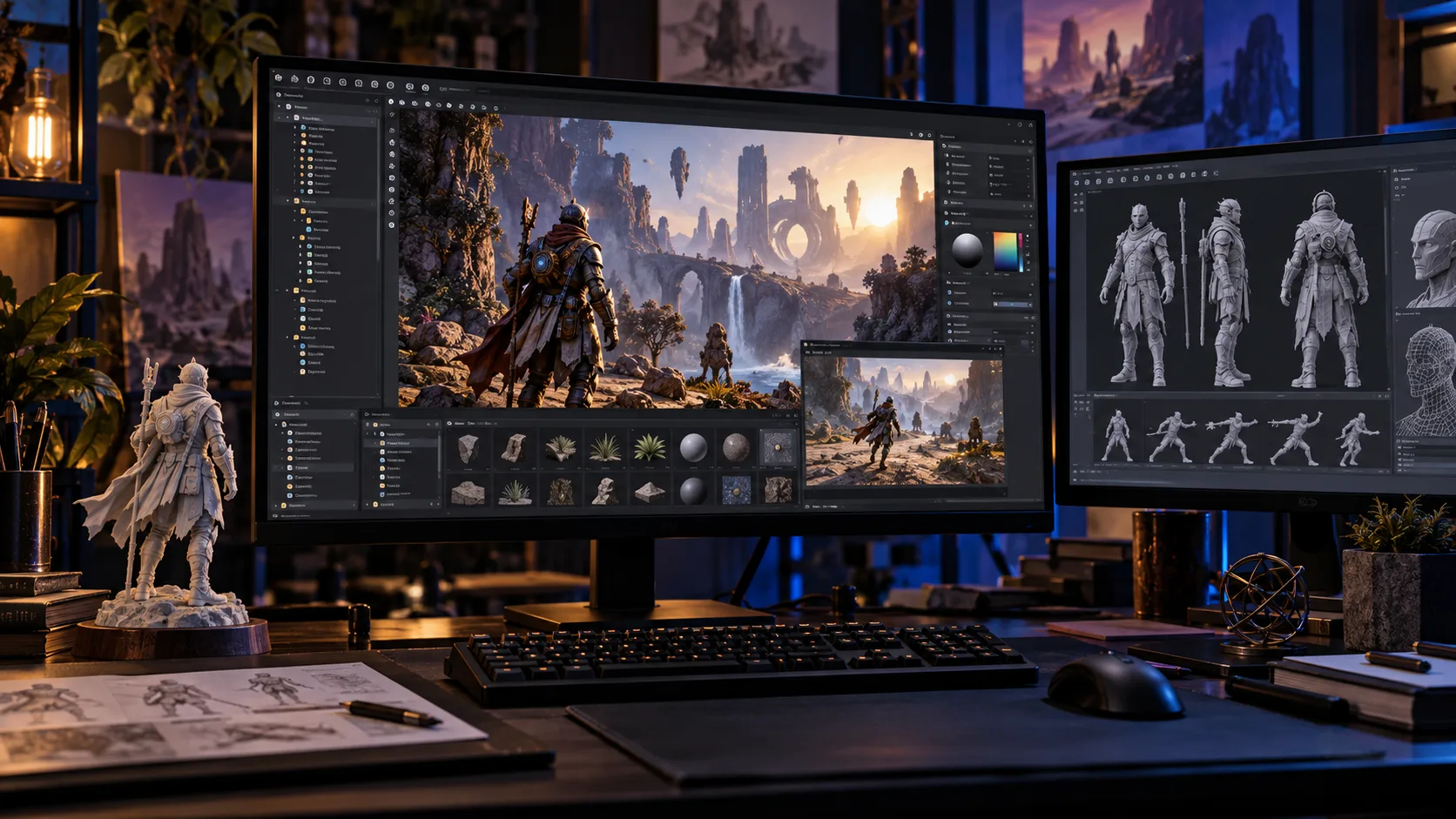
Game Development
From the first concept to characters, environments, working mechanics, testing, and a playable build.
01
Establish the player, objective, rules, platform, visual direction, and the smallest playable version worth proving.
02
Develop characters, environments, interface elements, animation, sound, and reusable game assets.
03
Connect assets to scenes, input, cameras, physics, behavior, progression, and the game engine.
04
Run builds, find failures, improve performance, revise the experience, and preserve an approved release package.
The way you’re used to doing things
You have a game in mind. First comes choosing an engine, learning how scenes and controls work, finding usable assets, and getting a small version to run. Then come the playtests, broken builds and revisions that turn the idea into something someone can actually play.
The intended game workflow keeps those dependencies in one project: start with a small playable version, preserve source and assets, run the build, record playtest failures, revise, and package the approved result.
A playable build, its editable project, asset provenance, test notes, and a clear list of remaining issues.
The workflow shown above is under development. We’re working as hard and fast as we can to bring the DagonTEK Studio to life.